If you’ve lived in Richmond for any length of time, you’ve probably noticed something about the water. It leaves spots on your dishes. Your shower doors get cloudy buildup that’s tough to scrub off. Your soap doesn’t lather the way it should. Your clothes feel stiff even after washing.
That’s hard water. And while those annoying little issues might seem like minor inconveniences, hard water is actually doing serious damage to your plumbing system and appliances every single day. Most homeowners don’t realize how much it’s costing them until something breaks down or needs replacing years earlier than it should.
Let me walk you through exactly what hard water does to your home and why it’s worth addressing before the damage adds up.
What Makes Richmond Water So Hard
Hard water means your water has high levels of dissolved minerals, primarily calcium and magnesium. These minerals are picked up as water moves through limestone and other rock formations before reaching your home.
Richmond sits in an area where hard water is extremely common. The mineral content in our water supply is significantly higher than what’s considered ideal. That’s why you see so much scale buildup on faucets and showerheads. Those white crusty deposits are mineral buildup from evaporated hard water.
Every time water flows through your pipes, sits in your water heater, or runs through your appliances, those minerals are being left behind. And over months and years, that buildup causes real problems.
Scale Buildup In Your Pipes
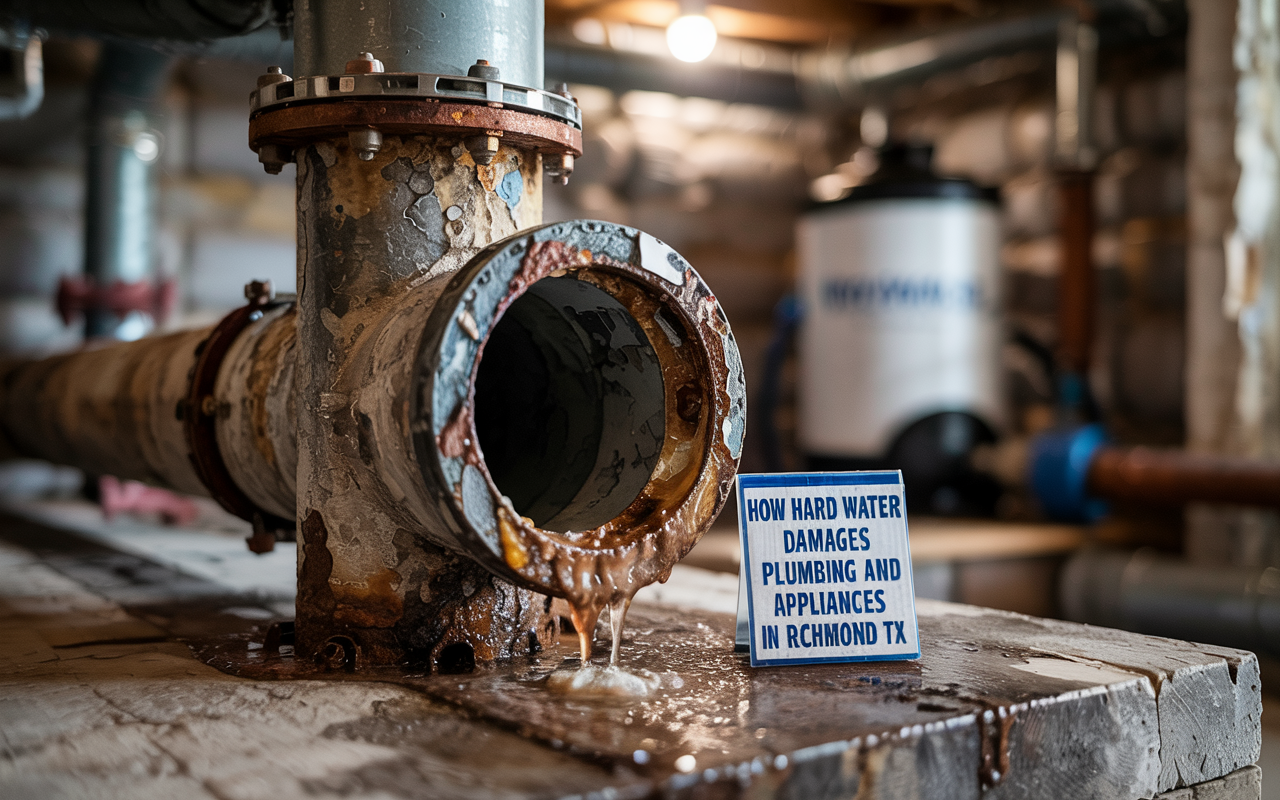
The most insidious damage from hard water happens where you can’t see it. Inside your pipes.
As hard water flows through your plumbing, minerals gradually deposit on the interior walls of the pipes. This scale buildup accumulates slowly but steadily. Over time, it reduces the diameter of your pipes and restricts water flow.
You might notice that water pressure isn’t what it used to be. Showers feel weaker. Faucets don’t have the same force. That’s often scale buildup narrowing your pipes.
In severe cases, pipes can become so clogged with mineral deposits that they need to be replaced entirely. That’s an expensive repair that could have been prevented with proper water treatment.
Older homes with galvanized steel pipes are especially vulnerable because the rough interior surface gives scale something to grip onto. But even modern copper and PEX pipes develop buildup over time with hard water.
The worst part is you won’t know how bad it is until you start having problems. By then, the damage is already done.
Your Water Heater Takes The Biggest Hit
If there’s one appliance that suffers most from hard water, it’s your water heater. And in Richmond, where we rely heavily on hot water for comfortable showers and daily tasks, that’s a problem.
Here’s what happens. When hard water gets heated, the minerals become even less soluble and precipitate out of the water faster. They settle at the bottom of your water heater tank as sediment. Layer after layer builds up over time.
That sediment layer acts as insulation between the heating element and the water. Your water heater has to work harder and longer to heat the water to the desired temperature. You’re using more energy, your utility bills go up, and the heating elements wear out faster.
The sediment also takes up space in the tank, reducing the actual volume of hot water available. You might notice you’re running out of hot water sooner than you used to.
Eventually, the buildup becomes so severe that the water heater fails prematurely. A water heater that should last 12 to 15 years might only make it 8 or 9 years in a home with untreated hard water.
I’ve drained water heaters in Richmond homes where the sediment layer was several inches thick. That’s years of mineral accumulation that’s been slowly destroying the appliance.
Dishwashers, Washing Machines, and Other Appliances
Hard water doesn’t just affect your plumbing. It damages any appliance that uses water.
Dishwashers develop mineral buildup on the heating element and spray arms. The jets get clogged with scale, reducing cleaning performance. You end up with spots on dishes because the minerals in the water don’t rinse clean.
Washing machines accumulate scale in the drum, on the heating element, and throughout the internal components. Clothes come out feeling stiff because mineral deposits get embedded in the fabric. Colors look dingy. Whites turn gray.
Coffee makers, ice makers, humidifiers, any appliance that uses water is vulnerable. Mineral buildup clogs components, reduces efficiency, and shortens lifespan.
Manufacturers estimate that hard water can cut appliance lifespan by 30% or more. You’re replacing expensive appliances years earlier than necessary, all because of mineral buildup that could have been prevented.
Increased Energy Costs
Here’s something most people don’t think about. Hard water costs you money every single month through higher energy bills.
When scale coats the heating elements in your water heater, it takes more energy to transfer heat to the water. Studies show that just a quarter inch of scale buildup can increase energy consumption by 20% or more.
Your dishwasher uses extra energy because it has to heat water that’s being insulated by mineral deposits. Your washing machine runs less efficiently. All of that adds up on your utility bills month after month.
Over the years, the extra energy costs from dealing with hard water can easily add up to hundreds or even thousands of dollars. Money that could have been saved with a water softener system.
Soap and Detergent Waste
Hard water doesn’t play well with soap and detergents. The minerals interfere with the cleaning action, so you need to use more product to get things clean.
That’s why your soap doesn’t lather properly in the shower. Why you’re using extra dish soap. Why you’re pouring more laundry detergent into every load.
You’re not just wasting product. You’re also leaving behind soap scum and residue because the soap can’t rinse clean in hard water. That buildup accumulates on fixtures, in tubs and showers, and even on your skin and hair.
Homeowners with hard water spend significantly more on cleaning products and personal care items trying to compensate for water quality issues that shouldn’t exist in the first place.
Fixture and Faucet Damage
Look at your faucets and showerheads. See those white, crusty deposits? That’s mineral scale from hard water. It’s not just ugly. It’s actually damaging the fixtures.
Scale buildup clogs aerators and showerhead jets. It corrodes finishes and eats away at chrome plating. Faucets start dripping because mineral deposits prevent washers and seals from closing properly.
You end up replacing fixtures more often than you should. And even new fixtures start showing damage within months because the hard water keeps attacking them.
Cleaning helps temporarily, but you’re fighting a losing battle if you’re not treating the water itself. The minerals keep coming, and the damage keeps accumulating.
The Solution That Actually Works
The good news is you don’t have to live with hard water damage. Professional water treatment eliminates the problem at the source.
A quality water softener system removes the calcium and magnesium from your water before it enters your home’s plumbing. No more mineral buildup in pipes. No more scale in your water heater. No more damage to appliances.
You’ll notice the difference immediately. Water feels softer on your skin. Soap lathers better. Dishes come out spot free. Clothes feel cleaner and softer. And behind the scenes, your plumbing and appliances are being protected from the damage that hard water causes.
For homes in Richmond where hard water is a constant issue, water softeners aren’t a luxury. They’re protection for one of your biggest investments.
At Temper Mechanical Air & Heat LLC, we help Richmond homeowners with comprehensive home water treatment solutions that address hard water and other water quality concerns. We’ll test your water, explain your options, and install a system that’s properly sized for your home’s needs.
If you’re tired of dealing with hard water problems and want to protect your plumbing and appliances from ongoing damage, professional water filtration richmond tx services can make a real difference.
Protect Your Home Now
Hard water damage happens slowly. You don’t wake up one day to find your pipes completely clogged or your water heater dead. It’s gradual wear that adds up over years.
But the cumulative cost in wasted energy, shortened appliance lifespans, extra cleaning products, and eventual repairs is significant. Most homeowners would save money in the long run by treating their water properly from the start.
If you’re dealing with Richmond’s hard water, don’t wait until you’re facing expensive plumbing repairs or premature appliance replacement. Address the problem now and protect your home for years to come.