The automotive industry is in the midst of one of the most profound transitions in its history. Electrification, lightweighting, tighter tolerances, and growing global competition have pushed manufacturers to rethink how components are produced. In this race for precision and efficiency, broaching machines have quietly stepped into the spotlight. Once seen merely as niche tools for internal keyways and splines, these machines are now becoming central to high-accuracy, high-volume automotive production. Their ability to blend speed, consistency, and superior surface finishes makes them essential for building the vehicles of today—and the advanced mobility systems of tomorrow.
The Evolving Demands of Automotive Production
Automotive manufacturing has always demanded strict precision, but the expectations have intensified dramatically in recent years. Electric vehicles, for example, rely on highly accurate driveline and motor components that must perform flawlessly under extreme conditions. Steering systems, gear assemblies, transmission parts, and braking components must meet tighter and tighter dimensional tolerances as vehicles become more advanced and safety standards grow more stringent. Against this backdrop, broaching machines have become invaluable because they consistently deliver the exactness required in these mission-critical parts.
In traditional machining environments, producing intricate internal profiles might require several processes—and with each additional step comes additional time, cost, and risk of error. Broaching consolidates many of these operations into a single, smooth pass, allowing manufacturers to produce complex features with unparalleled repeatability. As the industry shifts toward shorter production cycles and higher throughput, this capability is more relevant than ever.
Broaching as a Catalyst for Precision and Speed
One of the core reasons broaching is transforming automotive manufacturing lies in its unique ability to achieve precision at speed. For components such as gears, steering yokes, CV joints, and electric motor hubs, exact internal geometries are non-negotiable. Broaching machines cut these features in one pass, producing geometry that is not only accurate but uniform across tens of thousands of pieces. This combination of accuracy and speed is a rarity in machining, and it is precisely why broaching has become a cornerstone in mass-production automotive environments.
The stepwise design of broach tools ensures that material is removed gradually and predictably. Unlike milling or turning, where deflection or vibration can introduce variability, broaching maintains consistent contact and produces clean, smooth finishes. This reduces the need for post-processing and supports the industry’s push toward leaner, more efficient workflows.
Supporting the Shift to Electric and Hybrid Vehicles
Electric and hybrid powertrains depend on highly specialised, lightweight, and precisely engineered components. From rotor shafts to battery connection systems, these parts must integrate seamlessly within tightly controlled assemblies. Broaching machines are especially well-suited for producing the splines and keyways required in EV drivetrains, as well as the micro-precision elements found in various electronic housings.
Additionally, EV motors operate at high speeds, meaning even the slightest dimensional variation can lead to vibration, energy loss, or premature wear. Broaching’s inherent repeatability offers peace of mind for manufacturers striving to meet these demanding performance requirements. As EV production scales globally, the automotive industry is increasingly recognising broaching not just as an option, but as an essential component of the manufacturing toolkit.
Enhancing Durability and Safety Through Superior Finishes
Safety-critical automotive components must withstand years of mechanical stress, temperature variation, and wear. A rough or inconsistent surface finish can become a point of weakness. Broaching machines excel at producing exceptionally smooth surfaces without additional finishing steps. This contributes directly to improved durability and reliability in the final product.
For example, brake system components, clutch hubs, and differential gears often rely on broached geometries. The smoother the surface, the better the part performs under dynamic loads. In many cases, the broached finish is the final finish, eliminating extra steps and ensuring a consistent surface integrity across the entire production batch.
Scaling Production for Global Automotive Demand
Modern automotive manufacturing lives and dies by its ability to scale. As global markets expand and competition intensifies, manufacturers need machinery that can keep pace without compromising quality. Broaching machines are built for this challenge. Their long tool life, predictable maintenance requirements, and ability to automate make them ideal for high-volume environments.
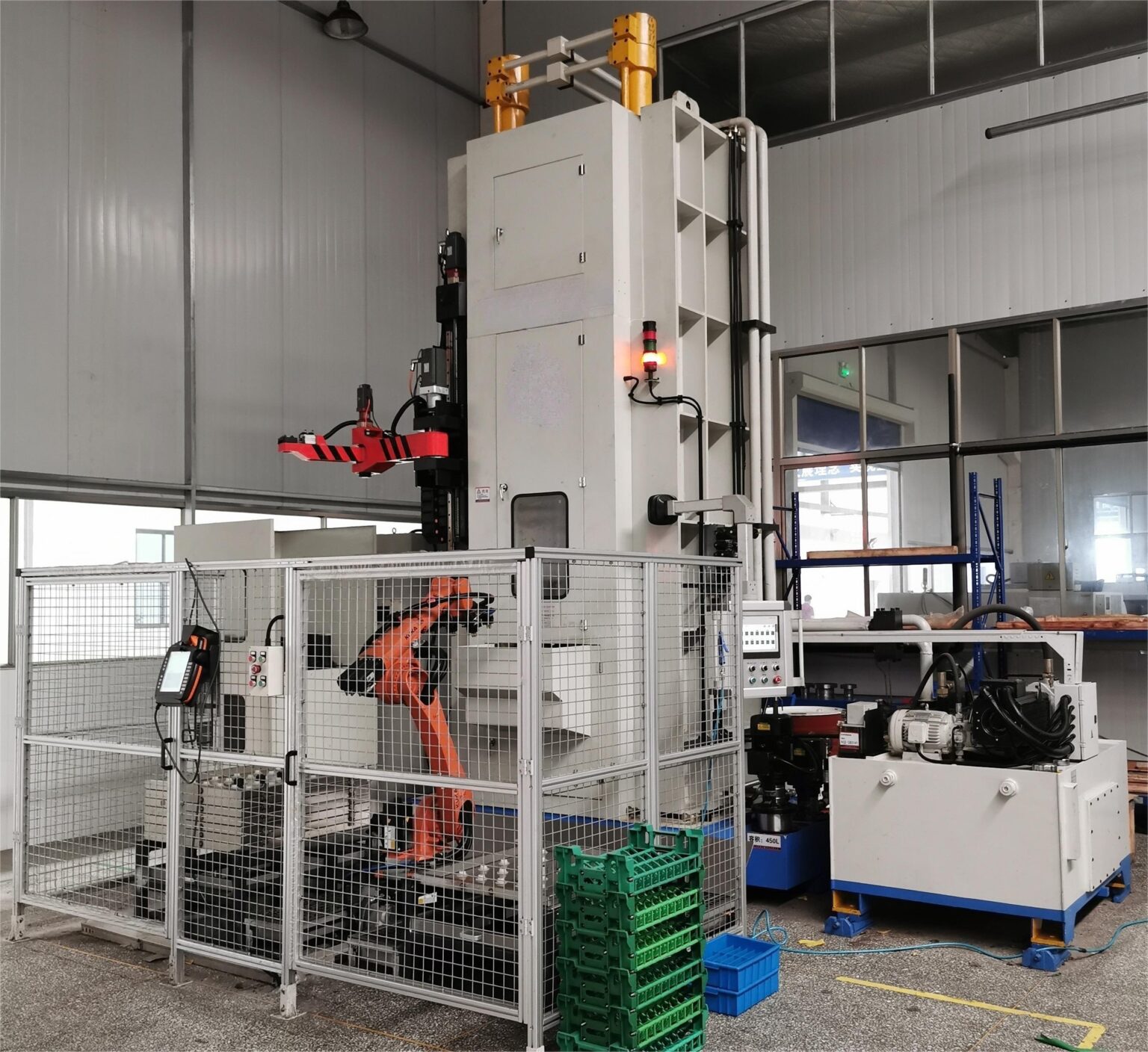
Many automotive plants now integrate broaching systems directly into automated lines where parts move seamlessly from forging or casting to machining and assembly. Automated vertical broaching machines, for instance, pair well with robotic handling systems, enabling continuous production with minimal human intervention. This synergy between broaching and automation helps automotive companies remain competitive while maintaining quality standards that grow more demanding every year.
Broaching machines may not always be the most talked-about technology in automotive manufacturing, but their impact is undeniable. They offer the rare combination of speed, precision, and consistency that the modern automotive landscape not only values but depends upon. As vehicles evolve and manufacturing methods become increasingly sophisticated, broaching continues to rise in importance, proving itself as a powerful force in shaping the quality, performance, and reliability of today’s automobiles—and those yet to come.